Braddon HouseOld and New
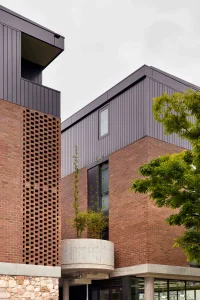
A sensitive refurbishment and additions to a 1920s brick cottage with a heritage overlay. The design and interiors approach followed principles of authenticity, connection between eras, and reuse. Threads of the old were carried over into the new with subtle brickwork details, datum lines, and restored and modernised features such as fireplaces.
A sensitive refurbishment and additions to a 1920s brick cottage with a heritage overlay. The design and interiors approach followed principles of authenticity, connection between eras, and reuse. Threads of the old were carried over into the new with subtle brickwork details, datum lines, and restored and modernised features such as fireplaces.
Location
Braddon
State
ACT
Country
Ngunnawal
Client
Private
Expertise
Single Residential, Interiors, Heritage
Year
2025
Collaborators
Eric Martin and Associates, Plot Design Group, Sellick Consultants, Think Make Enjoy, JRA Services Consulting
Photography
Kin Studio
Styling
Clay Interiors
1/9
Brief
The red brick cottage sits on a triangular block, next to a shared park and a five-minute walk to the city. The cottage was designed according to the original Griffin plan - part of the Braddon Housing Precinct created from 1921 to 1927. The precinct was the first of colonial Canberra’s nine planned precincts, which, collectively and individually, demonstrate the early principles of garden city planning.
Our brief was to refurbish the existing cottage, add a new north-facing kitchen and living area, and a new double garage. The additions were guided by the building’s heritage overlay.
The red brick cottage sits on a triangular block, next to a shared park and a five-minute walk to the city. The cottage was designed according to the original Griffin plan - part of the Braddon Housing Precinct created from 1921 to 1927. The precinct was the first of colonial Canberra’s nine planned precincts, which, collectively and individually, demonstrate the early principles of garden city planning.
Our brief was to refurbish the existing cottage, add a new north-facing kitchen and living area, and a new double garage. The additions were guided by the building’s heritage overlay.
Design
The design approach followed principles of authenticity, connection between eras, and reuse. Threads of the old were carried over into the new with subtle brickwork details and datum lines.
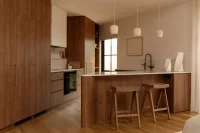
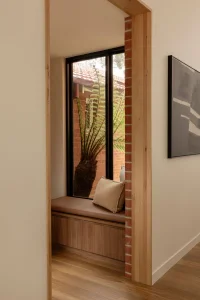
The original building was reconfigured to create a functional floor plan. A new indoor walkway connects the existing building to a new kitchen and living area that follows the site’s triangular shape.
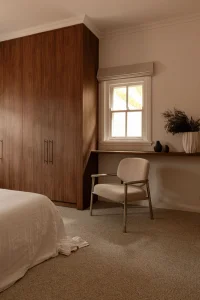
Old roof tiles were repurposed onto the garage structure to allow it to better nestle into its surroundings. Bricks repurposed from the site were used as garden pavers. The original windows were refurbished, and their glass replaced with double glazing to improve their acoustic and thermal performance.
The refurbishments and renovations were designed to create a functional home that can be navigated by people of all ages and abilities.
The design approach followed principles of authenticity, connection between eras, and reuse. Threads of the old were carried over into the new with subtle brickwork details and datum lines.
The original building was reconfigured to create a functional floor plan. A new indoor walkway connects the existing building to a new kitchen and living area that follows the site’s triangular shape.
Old roof tiles were repurposed onto the garage structure to allow it to better nestle into its surroundings. Bricks repurposed from the site were used as garden pavers. The original windows were refurbished, and their glass replaced with double glazing to improve their acoustic and thermal performance.
The refurbishments and renovations were designed to create a functional home that can be navigated by people of all ages and abilities.
Interiors
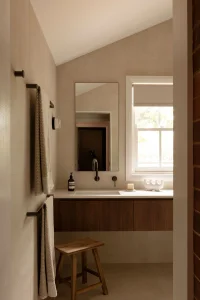
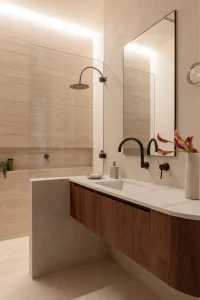
The interiors were designed to extend the architectural approach of linking existing and new elements.
Reclaimed tallowwood (Eucalyptus microcorys) flooring was laid throughout both sections of the house. Two fireplaces were restored with their original brick detailing and updated as functional electric heaters.
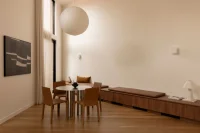
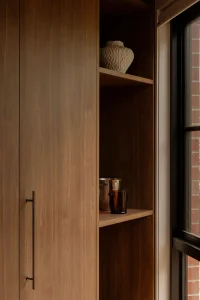
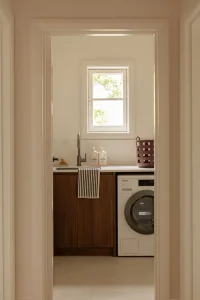
Storage was maximised with new fixed joinery in a warm mid-tone finish, chosen for its ease in both the new and heritage areas. The kitchen was carefully designed to maximise storage space in this unique triangular shape. Storage also lines the walls of the living area and connecting corridor, topped with leather cushions to double as benches.
The new living and dining areas are centred around a pendant light and are flexible, allowing residents to arrange the space according to their needs.
The interiors were designed to extend the architectural approach of linking existing and new elements.
Reclaimed tallowwood (Eucalyptus microcorys) flooring was laid throughout both sections of the house. Two fireplaces were restored with their original brick detailing and updated as functional electric heaters.
Storage was maximised with new fixed joinery in a warm mid-tone finish, chosen for its ease in both the new and heritage areas. The kitchen was carefully designed to maximise storage space in this unique triangular shape. Storage also lines the walls of the living area and connecting corridor, topped with leather cushions to double as benches.
The new living and dining areas are centred around a pendant light and are flexible, allowing residents to arrange the space according to their needs.
Impact
The cottage retains its heritage aesthetic while being updated for modern living. The new floor plan is functional and accessible to all ages and abilities. The new kitchen and living area are generous and north-facing, maximising natural light all year. The new and old architecture are distinct but connected, and original materials were repurposed in the new additions.
The cottage retains its heritage aesthetic while being updated for modern living. The new floor plan is functional and accessible to all ages and abilities. The new kitchen and living area are generous and north-facing, maximising natural light all year. The new and old architecture are distinct but connected, and original materials were repurposed in the new additions.