University of Canberra Innovation CentreResponse to Place
An early example of solar-passive design and water-sensitive landscape design, the Innovation Centre is an understated and honest response to place. Its structural clarity establishes a clear framework for future, logical expansion, connected by pathways and bound to its bush setting.
An early example of solar-passive design and water-sensitive landscape design, the Innovation Centre is an understated and honest response to place. Its structural clarity establishes a clear framework for future, logical expansion, connected by pathways and bound to its bush setting.
Location
Bruce
State
ACT
Country
Ngunnawal
Client
University of Canberra
Expertise
Education, Commercial
Year
2006
Collaborators
Manteena, MADE LA (previously Enviro Links Design)
Photography
Will Neill




1/12
Brief
An incubation centre for the public research university, the University of Canberra. The brief asked for a place in which to facilitate collaboration between academia and industry across STEM disciplines. The building was intended as the first stage in a potential series of developments.
An incubation centre for the public research university, the University of Canberra. The brief asked for a place in which to facilitate collaboration between academia and industry across STEM disciplines. The building was intended as the first stage in a potential series of developments.
Design
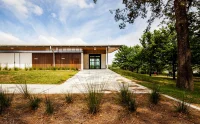
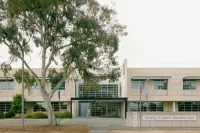
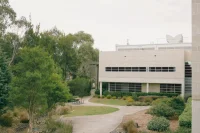
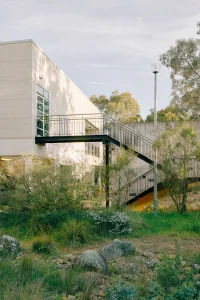
Organised around a clear structural grid with formal colonnades, the building is a discreet, two-storey form that sits neatly within its existing bush landscape. Structural clarity and honest expression were central to the design intent and established a clear framework for future, logical expansion.
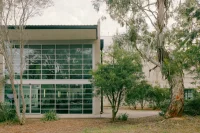
At the heart of the building is a central street that functions as a social and intellectual hub, a place for exchange. This internal spine reinforces the building’s role as a connector, both physically and conceptually, between the university and industry partners. At the end of the spine, a canteen and sitting space look out to the landscape via a ceiling-to-floor window.
The building responds to its aspect and environment, an early example of solar-passive design. It incorporates north-facing sunscreens, deep façade articulations, and carefully proportioned window reveals to provide effective shading.
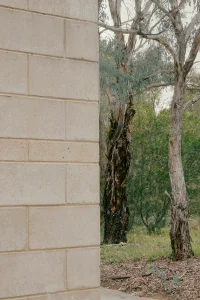
Green glass and concrete blockwork were chosen to reflect the surrounding eucalypts.
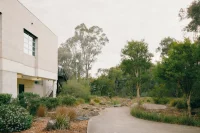
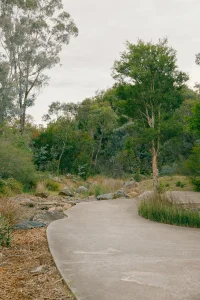
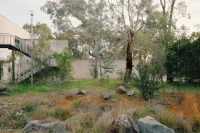
Outside, out the back, a quiet courtyard provides a space for quiet contemplation. The existing landscape was merged into a new native landscape by Enviro Links Design, with native endemic understorey plantings. Stormwater spills into dry creek beds, where it is detained to water this newer understorey.
Bush corridors and pathways reinforce the building’s anticipated role as the first stage in a broader, environmentally integrated precinct.
Organised around a clear structural grid with formal colonnades, the building is a discreet, two-storey form that sits neatly within its existing bush landscape. Structural clarity and honest expression were central to the design intent and established a clear framework for future, logical expansion.
At the heart of the building is a central street that functions as a social and intellectual hub, a place for exchange. This internal spine reinforces the building’s role as a connector, both physically and conceptually, between the university and industry partners. At the end of the spine, a canteen and sitting space look out to the landscape via a ceiling-to-floor window.
The building responds to its aspect and environment, an early example of solar-passive design. It incorporates north-facing sunscreens, deep façade articulations, and carefully proportioned window reveals to provide effective shading.
Green glass and concrete blockwork were chosen to reflect the surrounding eucalypts.
Outside, out the back, a quiet courtyard provides a space for quiet contemplation. The existing landscape was merged into a new native landscape by Enviro Links Design, with native endemic understorey plantings. Stormwater spills into dry creek beds, where it is detained to water this newer understorey.
Bush corridors and pathways reinforce the building’s anticipated role as the first stage in a broader, environmentally integrated precinct.
Impact
Over twenty years after its construction, the Innovation Centre has aged nicely within its bush setting. A pair of gang-gang cockatoos (native to Canberra and listed as vulnerable) were spotted during our 2025 site visit.
Over twenty years after its construction, the Innovation Centre has aged nicely within its bush setting. A pair of gang-gang cockatoos (native to Canberra and listed as vulnerable) were spotted during our 2025 site visit.