Lowanna24 Replace Three
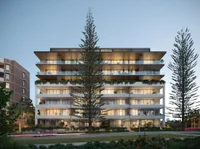
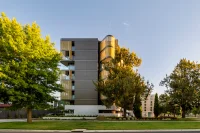
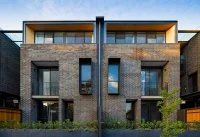
A well-considered and well-integrated infill development in Canberra. The Lowanna apartments provide density and diversity to an established inner-city suburb, Braddon, whilst maintaining the proportions and character of its surrounding streetscape. 24 one- and two-bedroom apartments (half of each) with terraces facing a common garden replace three standalone houses.
The site’s well-connected location, considered planning, high-quality construction and material sensitivity, set a new standard for medium-density dwellings in Canberra.
A well-considered and well-integrated infill development in Canberra. The Lowanna apartments provide density and diversity to an established inner-city suburb, Braddon, whilst maintaining the proportions and character of its surrounding streetscape. 24 one- and two-bedroom apartments (half of each) with terraces facing a common garden replace three standalone houses.
The site’s well-connected location, considered planning, high-quality construction and material sensitivity, set a new standard for medium-density dwellings in Canberra.
Location
Braddon
State
ACT
Country
Ngunnawal
Client
Living Developments Australia
Expertise
Multi Residential, Interiors
Year
2015
Collaborators
Monarch Constructions, AWT Consulting Engineers, Harris Hobbs Landscape, GHD Electrical, Mott MacDonald
Photography
Stefan Postles
Brief
To deliver 24 one—and two-bedroom apartments on a 2,118 m² site in Braddon. Braddon is an unusual suburb in Canberra in that it is both suburban and urban in character. It is home to Canberra’s first light-industrial area and the only completed residential area by the city’s designer, Walter Burley Griffin. The site is well located — close to shops, public transport, and active transport pathways.
To deliver 24 one—and two-bedroom apartments on a 2,118 m² site in Braddon. Braddon is an unusual suburb in Canberra in that it is both suburban and urban in character. It is home to Canberra’s first light-industrial area and the only completed residential area by the city’s designer, Walter Burley Griffin. The site is well located — close to shops, public transport, and active transport pathways.
Design
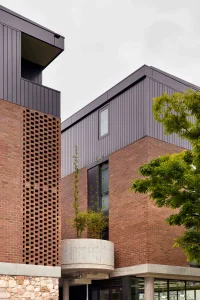
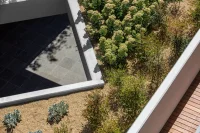
The design of the apartments replicates the character of the site’s original duplex dwellings by creating a series of similarly scaled buildings, each separated by open stairways. These openings between the buildings allow for views between the front and rear gardens, breaking up the buildings’ mass relative to their low-density neighbours. Each apartment has a private terrace that opens onto a shared garden.
Passive design principles—including thermal mass, cross ventilation, solar orientation, and control—have been applied to create comfortable homes while reducing heating, cooling, and artificial lighting costs. The apartments are north facing with overhangs to control solar access in summer and winter. Fences and privacy screens allow solar penetration and dappled light.
Internally, floor plans are based around the concept of a central joinery 'core' that efficiently houses the kitchen, bathrooms and main storage areas for each apartment.
Robust materials such as brick, concrete and steel cladding have also been chosen for their durability and low maintenance needs.
The design of the apartments replicates the character of the site’s original duplex dwellings by creating a series of similarly scaled buildings, each separated by open stairways. These openings between the buildings allow for views between the front and rear gardens, breaking up the buildings’ mass relative to their low-density neighbours. Each apartment has a private terrace that opens onto a shared garden.
Passive design principles—including thermal mass, cross ventilation, solar orientation, and control—have been applied to create comfortable homes while reducing heating, cooling, and artificial lighting costs. The apartments are north facing with overhangs to control solar access in summer and winter. Fences and privacy screens allow solar penetration and dappled light.
Internally, floor plans are based around the concept of a central joinery 'core' that efficiently houses the kitchen, bathrooms and main storage areas for each apartment.
Robust materials such as brick, concrete and steel cladding have also been chosen for their durability and low maintenance needs.
Impact
24 homes have replaced three. The apartments demonstrate passive environmental design, are well connected to existing amenities and transport, reduce the need for car reliance, are communal, and are economical in their construction, operation and maintenance.
Lowanna is a timely exemplar of quality low rise, medium density building that shows how urban infill can contribute to the street and community in which it sits. – 2015 ACT Awards Jury Citation.
24 homes have replaced three. The apartments demonstrate passive environmental design, are well connected to existing amenities and transport, reduce the need for car reliance, are communal, and are economical in their construction, operation and maintenance.
Lowanna is a timely exemplar of quality low rise, medium density building that shows how urban infill can contribute to the street and community in which it sits. – 2015 ACT Awards Jury Citation.
Awards
2015
The Sydney Ancher Award, Residential Architecture: Multiple Housing, Australian Institute of Architects National
2015
The Sydney Ancher Award, Residential Architecture: Multiple Housing, Australian Institute of Architects National